
Golden Lessons
Why Charlie and the Chocolate Factory is the Greatest Behavioral Finance Story Ever Written

A weeks ago, I pulled Charlie and the Chocolate Factory off the shelf to read to my kids. As soon as the words on the first page left my mouth, I was transported back to my own childhood. I remembered sitting cross-legged on the carpet in my second-grade classroom, listening to Mrs. Broderius read the book aloud, her voice animating each character. I smiled, thinking of the night my dad took me to a community theater performance of the story, the small-town stage lit up with candy-colored magic. These sweet memories (pun intended) that shaped my love for this tale.
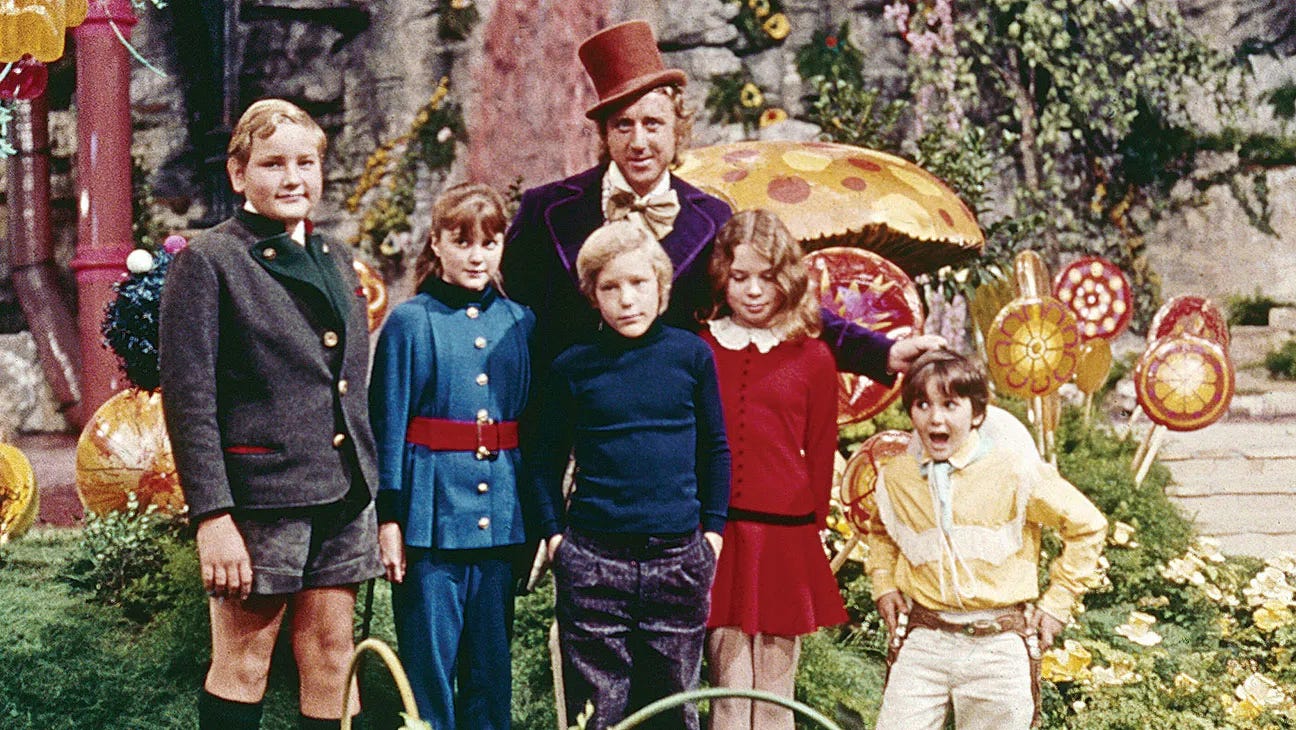
As a child, I loved the wonder of Willy Wonka’s world. As an adult, reading it again, I recognize it’s also one of the greatest behavioral finance stories of all time. The chocolate factory isn’t just whimsical fantasy. It’s a case study in human behavior. Each golden ticket winner offers a lesson and crystalizes a relatable but problematic trap:
Augustus Gloop: Unchecked consumption and greed.
Veruca Salt: Entitlement and the lure of immediacy
Violet Beauregarde: The danger of not knowing when to stop.
Mike Teavee: Distraction and disconnection.
And then there’s Charlie. Sweet-as-chocolate Charlie. A boy who has nothing but manages to carry himself with humility, gratitude, and restraint. He isn’t perfect (he did partake in the fizzy lifting drinks after all). Still, he shows us that character can outweigh circumstance.
Behavioral finance asks: Why do we make the choices we do? How do we respond to scarcity, temptation, competition, and abundance? Roald Dahl may not have had Kahneman and Tversky on his bookshelf, but he understood something about human nature. Today I can see that the factory was never really about chocolate. It was about character and the ways we reveal ourselves when faced with desire and opportunity.
When I close the book at night, my kids just want to know what happens to the Oompa-Loompas or the Everlasting Gobstopper. That’s how it should be. But after they’re kissed and tucked in I’ve found myself marveling at the fact that a children’s story I adored is also a timeless parable about money, self-control, and the choices that shape a life.
If you liked this post, spread the Joy and share it with someone else!
If you’re interested in more strategies for strengthening self-awareness and raising your EQ, don’t miss Finding Joy:
For more of my musings on love, life, and work, you can follow me on Linked In.